This guest blog was written by Steven Hernández, Vice-President of the Latino Civic Association (LCA) of Tompkins County. In partnership with The History Center of Tompkins County, the LCA leads organization of Donde Nos Encontramos (Where We Find Ourselves). Donde Nos Encontramos is a public-history initiative documenting Latino life in Tompkins County through oral histories, archival research, photography, art, and storytelling. Visit Ithaca is proud to support this initiative and help share this important history with visitors.
Visitors to Ithaca can grow accustomed to being told where to look.
“Look at the waterfalls”, “look at the Gorges.” “Look at Cayuga Lake.” “Look at Cornell.” Look, inevitably, for somewhere to park.
But there’s another Ithaca that is visible if you know where to look: a Latino history... stretching from a 19th century Puerto Rican engineer on East Hill to Salvadoran immigrants building a family business downtown; from student protest at Cornell to community picnics at Cayuga lake.
This is a history without a single actual monument or neighborhood to call its own.
To find it you have to travel. A good place one can begin is with the stars.
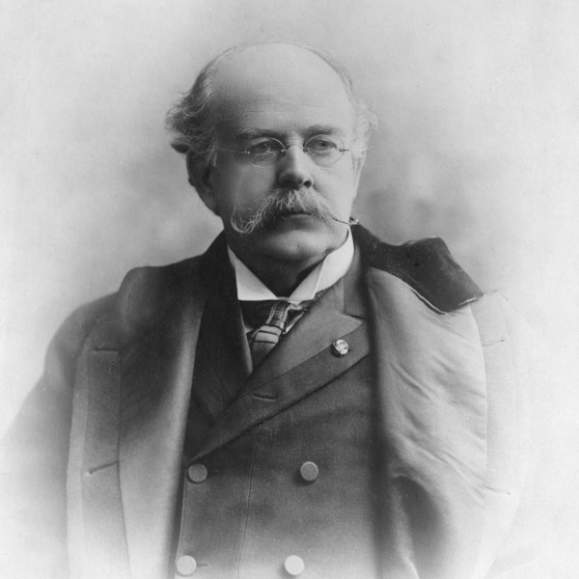
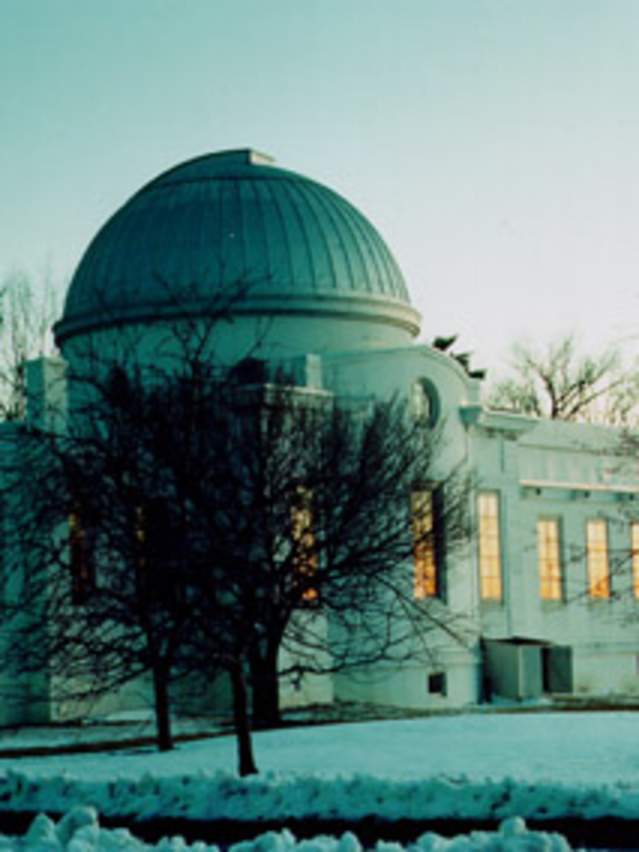
Cornell has The Fuertes Observatory where visitors will encounter the name of Estevan Antonio Fuertes without really getting a good idea of who he was. Fuertes was born in San Juan, Puerto Rico in 1838 and came to Cornell in 1873 on invitation to become a foundational figure in its civil engineering program. Fuertes also advocated practical astronomical training for engineers and thus this observatory which was completed in 1917 bears his name. Today visitors can still climb beneath its dome on Friday evenings and look through its historic telescope. Check the Cornell Astronomical Society’s schedule before visiting; observing depends on weather. Beneath its dome this university landmark becomes a connection between Puerto Rico and the development of Cornell.
While still on campus, make Day Hall a stop on your walk. Back in November of1993 more than 100 students occupied Cornell’s administration building for day, protesting Latino underrepresentation and inadequate support. Their organizing helped bring an expansion of what would become known as the Latino Studies program (then called Hisapanic American Studies Program) and the creation of the Latino Living Center, also worth a visit. Check theLatino Living Center’s public events for opportunities to encounter the community that organizing helped sustain. The center now occupies Anna Comstock Hall on North Campus.
A visitor to Ithaca can then follow that Fuertes name downhill.
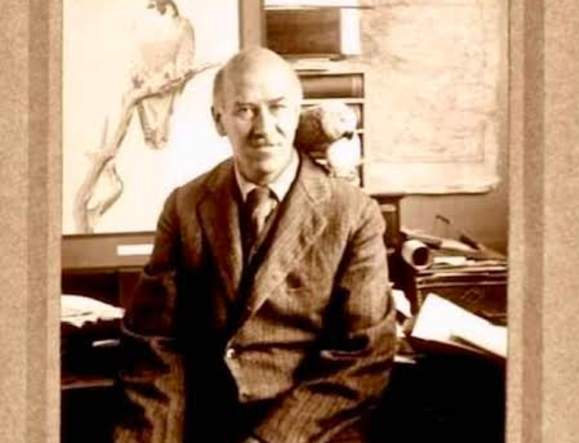
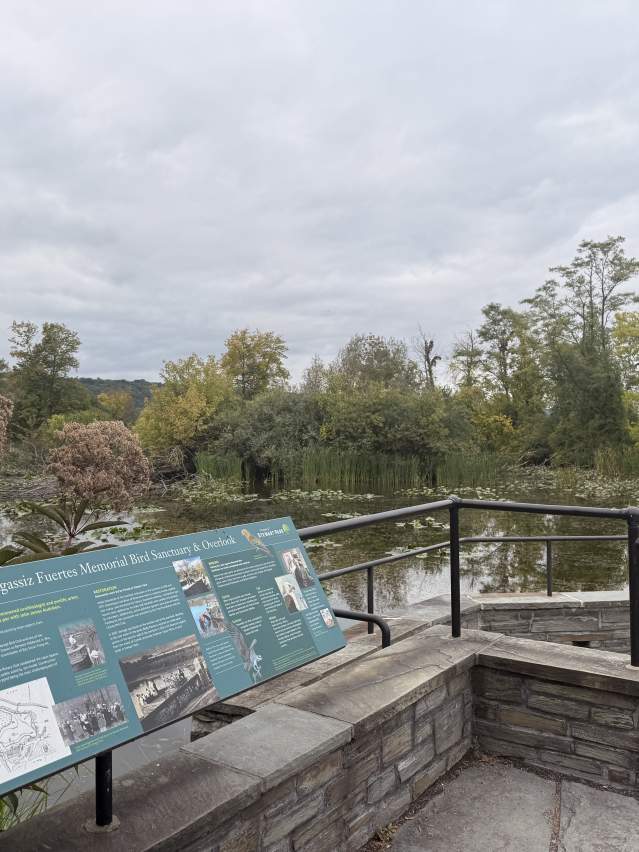
At Stewart Park, on the southern shore of Cayuga lake you’ll find the Fuertes Bird Sanctuary named not for Estevan but for his Ithaca-born son Louis Agassiz Fuertes. Louis became one of America’s great bird artists and also an important figure in Cornell ornithology and conservation.
Near the Cascadilla Boathouse, the stone Fuertes Overlook offers visitors a place to pause beside the sanctuary’s pond. Bring binoculars, walk along the waterfront and consider that family connection; a father born in San Juan helped students read the heavens, his son helped people see birds more closely.
Their names link two very different ways of experiencing Ithaca.
The Latino Civic Associations gatherings add another living connection; families continue making community through shared celebrations. At the same Stewart Park in the spring the LCA celebrates an annual picnic every year, just a few yards from the sanctuary. Check the LCA website for events that occur throughout the year that might bring your visit into that story.
Continuing along with Fuertes if one visits the Cornell Lab of Ornithology at 159 Sapsucker Woods Road you’ll find where Louis Fuertes and fellow birders discovered nesting yellow bellied sapsuckers. That discovery gave Sapsucker Woods its name.
Farther north, in Lansing, another side of Louis’s life survives through the Savage Club of Ithaca. Fuertes was a founding and early member of this musical and theatrical organization which was founded in 1895. It now makes its home at the Lansing Area Performance hall.
The club preserves his chair adorned with a profile sketch of Fuertes as a wonderfully personal reminder that the celebrated bird artist belonged to a local circle of performers and friends. Check the hall’s public performance calendar and contact the club beforehand about seeing the chair. A scheduled show offers a way to enjoy a tradition he helped sustain.
After enjoying the Latino connection to the Fuertes family and Ithaca you can head to Pizza Aromaat 307 South Meadow Street. Mauricio and Dora Rosa arrived in the United States in 1981 seeking asylum from El Salvador’s civil war. After some time they found their way to Ithaca in the 1990’s and established a Pizzaria. Their family restaurant has become a longtime Ithaca institution, later relocating from it’s downtown home.
Try a pupusa from the Salvadoran offerings alongside the pizza. Here the connection between migration and local life is something visitors can taste. A restaurant carries history through the work if its owners, the food they prepare and the customers who return. It stands as a reminder that Ithaca is not only a home for academics, but also a place that welcomes refugees.
These stops of course are not the only points to visit but they make an easy starting point for visitors. Plan the campus walk and waterfront visit during daylight, check performance and restaurant schedules and save the observatory for scheduled evening opening.
Tompkins County’s Latino history reaches beyond any single building or institution. Some of it survives in university records, some in family photographs, gatherings and businesses. Visitng these places gives that history a setting and offers another way to see a town you may have thought you already knew.